
Indigestion has become so common today that many people accept it as a routine inconvenience—post-meal heaviness, abdominal discomfort, unpredictable appetite, sluggishness, excessive sleepiness, or a sense of mental dullness. But Ajirna is not just a digestive issue; it is an early warning sign of deeper imbalance. At Parachin Holistic Care we often see that Ajirna is the doorway through which larger metabolic, psychological and lifestyle disorders gradually enter.
From an allopathic point of view, indigestion arises from disturbed acid secretion, delayed gastric emptying, irregular eating patterns, overeating, certain medications, stress-related gastritis, or functional motility disorders. These explanations help identify the structural or biochemical disruption, but they often miss a subtle truth—digestion is not only a mechanical process, it is a rhythmic and intelligent one governed by signals, habits, emotions and timing.
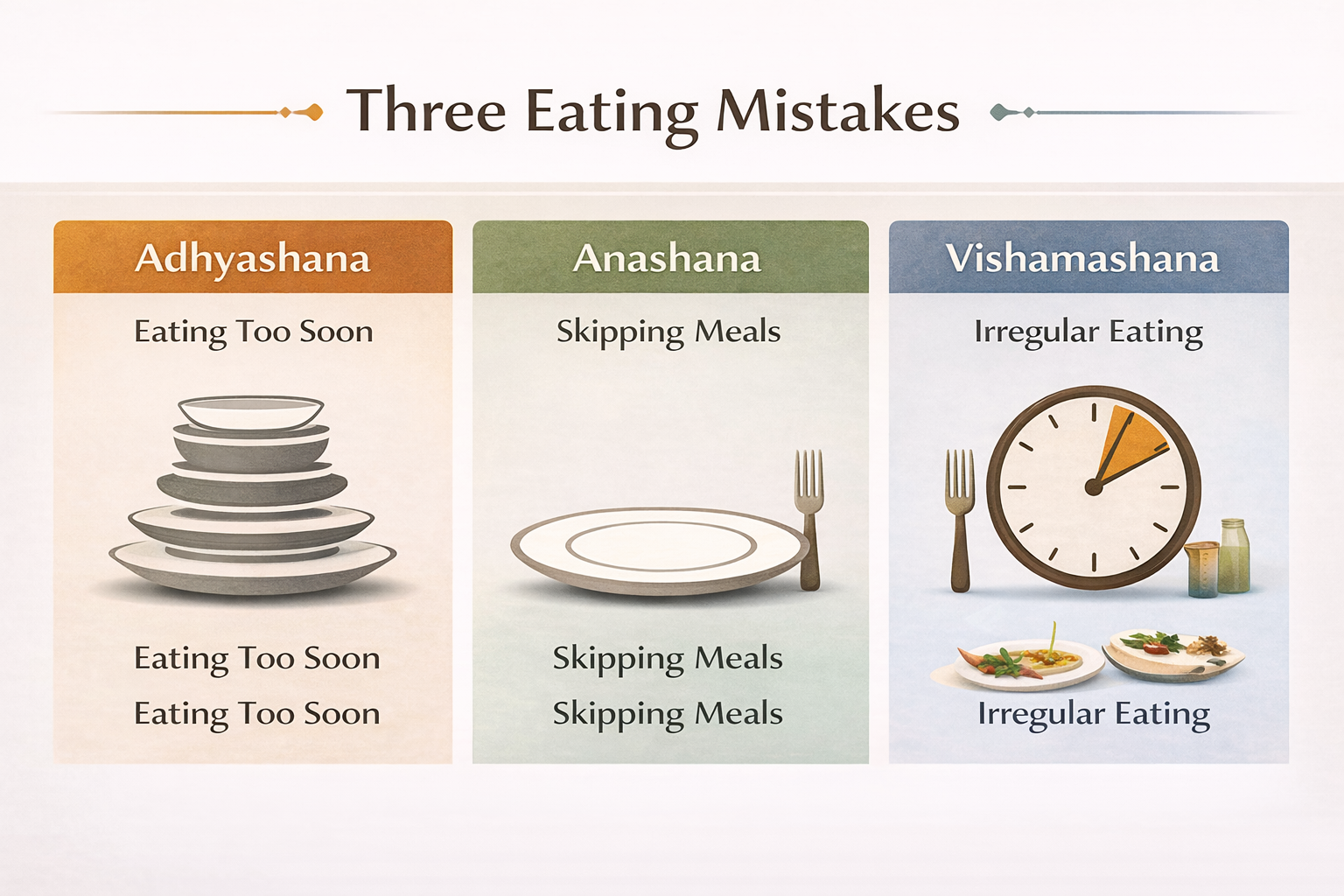
Ayurveda captures this “rhythm” through the concept of Agni—the transformative fire that digests food. When Agni becomes weak, variable or overloaded, Ajirna begins. What makes Ayurvedic understanding unique is that it identifies specific patterns of faulty eating:
• Adhyashana (eating before previous food is digested),
• Anashana (skipping meals),
• Vishamashana (irregular timing or quantity).
Each producing a different disturbance in Agni. This goes far deeper than the usual description of “overeating and junk food.” It explains why even home-cooked food sometimes causes indigestion—because timing, mental state, and digestive rhythm also matter.