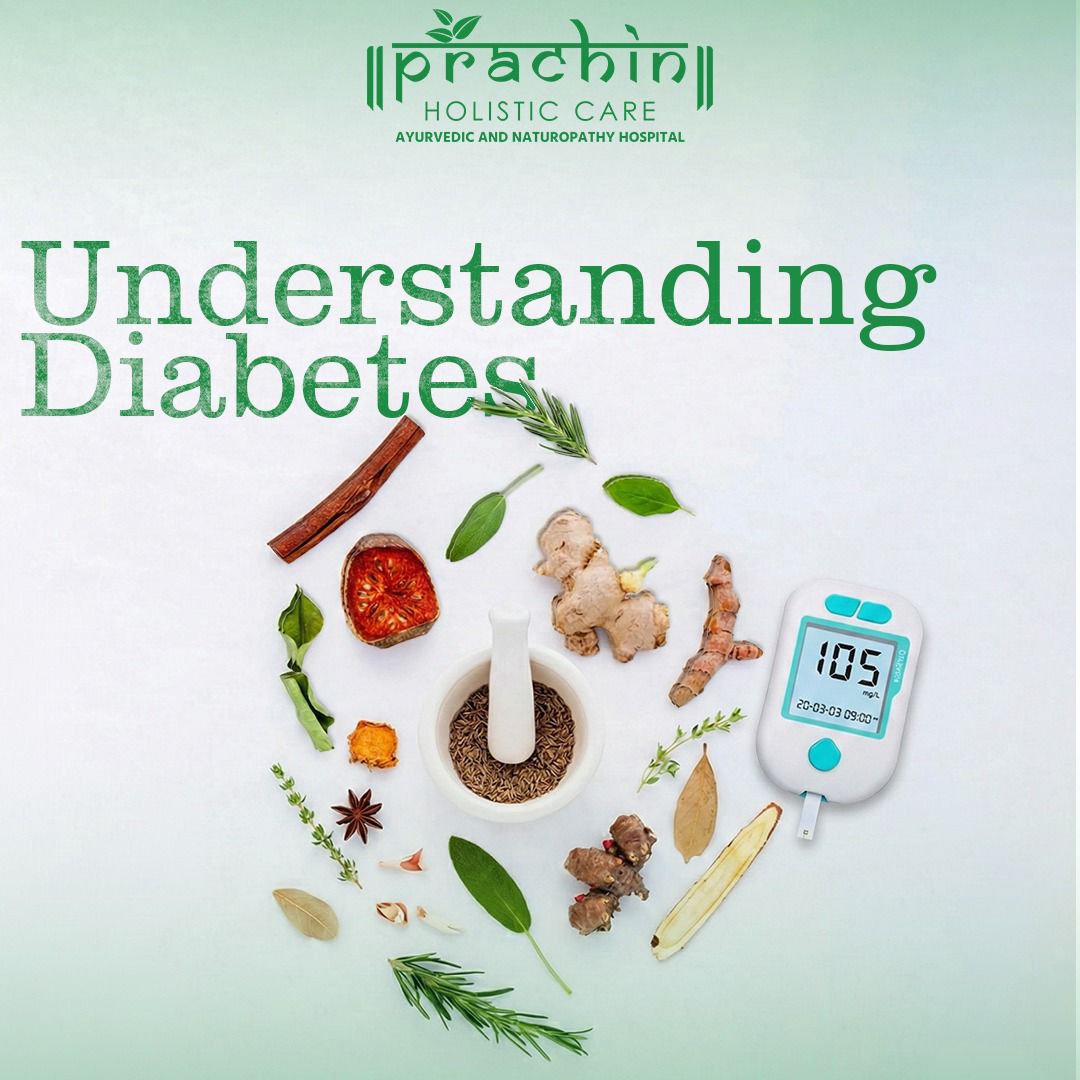
Welcome to the Prachin Holistic Care blog, where we bridge timeless Ayurvedic principles with contemporary health insights. As a consultant at our Ahmedabad centre, I’m excited to kick off our series on diabetes—a condition affecting millions worldwide, including right here in India.
In this first part, we’ll explore the general landscape of diabetes, its causes from both
allopathic (modern medicine) and Ayurvedic perspectives, and some fresh, evidence-based
connections between the two. Our goal? To empower you with knowledge that’s not just
routine but offers a novel lens for understanding and managing this challenge. Let’s dive in with a friendly, approachable tone—think of this as a conversation over chai.
The Global and Local Picture:
Why Diabetes Matters Now More Than Ever
Diabetes isn’t just a buzzword; it’s a silent epidemic reshaping lives. Imagine your body as a
finely tuned engine, where sugar (glucose) is the fuel. In diabetes, that fuel system glitches,
leading to high blood sugar levels that can harm organs over time. Globally, over 500 million
adults lived with diabetes in 2024, with projections soaring to nearly 900 million by 2050. In
India, we’re hit hard we rank second worldwide, with about 90 million adults affected in
2024, up from 77 million just a few years prior. That’s one in every nine adults, often linked to rapid urbanization, processed foods, and sedentary jobs. Here in Ahmedabad, we see this daily.
At Prachin patients juggling busy lives while battling fatigue, thirst, and frequent trips to the
bathroom. But here’s the hopeful twist: early awareness and holistic management can turn
the tide, preventing complications like heart disease or nerve damage.
Causative Factors According to Allopathy: The Modern Breakdown
In allopathic medicine, diabetes (especially Type 2, the most common form) is viewed through a biochemical lens. It’s like a puzzle where pieces don’t fit: your body either doesn’t produce enough insulin (the key that unlocks cells to use glucose) or resists its effects.
Key triggers include:
Insulin Resistance: Often the starting point, where cells in muscles, fat, and liver ignore
insulin’s signals. Culprits? Obesity, lack of exercise, poor diet high in processed sugars, and
hormonal shifts (like during pregnancy or conditions such as PCOS).
Genetic and Environmental Mix: Family history plays a role, but lifestyle amps it up—think desk
jobs, fast food, and stress. For Type 1 (less common), it’s autoimmune: your immune system
attacks insulin-producing cells.
Other Contributors: Age (over 35), ethnicity (higher risk in South Asians), and conditions like
hypertension add layers.
This view is precise and measurable, relying on tests like HbA1c to spot issues early. But it
often focuses on symptoms rather than the “why” behind your unique body
Causative Factors According to Ayurveda: The Root Imbalance
Now, shift gears to Ayurveda, our ancient science that’s all about balance. Diabetes, or
“Madhumeha” (honey-like urine), falls under “Prameha“—a group of urinary disorders. It’s not just about sugar; it’s a systemic imbalance, primarily of Kapha dosha (the earthy, watery energy that governs structure and lubrication). Picture Kapha as a calm river—when it overflows, it muddies everything.
Dosha Disruption: Excess Kapha blocks channels (srotas), leading to poor digestion (weak
Agni, or metabolic fire) and toxin buildup (Ama). This manifests as insulin resistance in modern
terms. Vata and Pitta can join in advanced stages, causing complications.
Lifestyle and Diet Triggers: Overindulging in sweet, oily, heavy foods (Kapha-aggravating),
laziness, irregular sleep, and mental stress like anxiety or anger. It’s like feeding a fire that’s
already too low—everything clogs up.
Personal Constitution (Prakriti): Your innate dosha mix matters—Kapha-dominant folks are
more prone, but anyone can tip the scales with poor habits.
Ayurveda’s edge? It’s personalized—assessing your Prakriti to pinpoint why you have
diabetes, not just treating the numbers.
A Novel Bridge: Where Allopathy and Ayurveda Converge for Fresh Insights
Here’s where it gets exciting—and novel. Beyond the usual “herbs vs. pills” talk, emerging
research reveals deep correlations, blending ancient wisdom with modern biology for a “novel vision” of diabetes.
Ayurgenomics: Genetics Meets Prakriti: Studies show your Ayurvedic constitution correlates
with gene expression. For instance, Vata-Kapha types have higher diabetes risk, mirroring
genetic predispositions in allopathy. It’s like Ayurveda anticipated epigenetics—how lifestyle
flips gene switches.
Gut-Centric Overlap: Both systems spotlight the gut. Ayurveda’s Agni (digestive fire) aligns with the modern microbiome—imbalanced gut bacteria (like low Agni) fuel insulin resistance. Herbs like turmeric and amla modulate this, reducing glycemic load as per recent trials.
Ojas as Energy Currency: Reinterpreting Ojas (vital essence) as systemic glucose offers a fresh angle both deplete in diabetes, affecting energy and immunity. This ties Ayurvedic depletion to metabolic science.
These insights aren’t routine they’re from cutting-edge “Ayurveda-Biology” platforms, showing how balancing doshas enhances allopathic outcomes, like better insulin sensitivity via personalized diets. At Prachin, we use this integrated view to craft plans that feel innovative yet rooted.