
Weight loss has become one of the most discussed health goals of our time. Almost everyone has tried some form of dieting—low-carb, intermittent fasting, calorie counting, detox juices, or skipping meals. Many people initially lose weight, only to regain it weeks or months later. This cycle of losing and gaining weight can feel exhausting and discouraging.
If dieting alone truly worked, obesity rates would not continue to rise. The real issue is that weight gain is rarely just about overeating. It is a complex interplay of digestion, metabolism, hormones, stress, sleep, and lifestyle patterns. Treating it as a simple calorie equation often leads to temporary results rather than lasting transformation. This is where a holistic understanding becomes essential.

The Calorie Myth: Why “Eat Less, Move More” Is Incomplete
The most common advice for weight loss is simple: reduce calories and increase exercise. While this advice is not entirely wrong, it overlooks an important fact—your body is biologically designed to protect itself.
When you suddenly restrict calories:
- Your metabolism slows down.
- Hunger hormones increase.
- Energy levels drop.
- Cravings intensify.
- The body becomes efficient at storing fat.
This protective response is not a failure of willpower; it is physiology. The body interprets severe restriction as stress or starvation. Instead of burning fat freely, it holds onto it.
This is why extreme dieting often leads to:
- Persistent fatigue
- Hair thinning
- Mood swings
- Irregular menstruation
- Digestive discomfort
- Rapid weight regain
In many cases, the weight that returns is mostly fat rather than muscle, making the next attempt even harder.
Weight Gain Is a Metabolic Story, Not Just a Food Story
Two individuals can eat similar diets and have completely different body compositions. Why? Because metabolism differs.
Metabolism is influenced by:
- Digestive efficiency
- Insulin sensitivity
- Thyroid function
- Stress hormone levels
- Sleep quality
- Genetic predisposition
- Reproductive hormone balance
For example, women with Polycystic Ovary Syndrome often struggle with weight despite disciplined dieting. Insulin resistance makes fat loss slower, especially around the abdomen. In such cases, simply cutting calories does not address the root cause.
Similarly, chronic stress elevates cortisol, a hormone that encourages fat storage, particularly in the abdominal region. A person under long-term stress may gain weight even if their food intake is moderate. This shows that sustainable weight loss requires metabolic correction, not just dietary restriction.
The Hidden Role of Digestion
Modern discussions on weight often ignore digestion. Yet digestion determines how efficiently food is converted into energy versus stored as fat.
If digestion is weak:
- Nutrients are poorly absorbed.
- Toxins accumulate.
- Bloating and sluggishness develop.
- Cravings increase.
- Metabolism becomes inefficient.
You may eat less but still feel heavy and tired. In such cases, the issue is not quantity of food but quality of processing. From an Ayurvedic perspective, obesity (Sthoulya) is closely linked to impaired digestive fire (Agni) and Kapha imbalance. When Agni is weak, the body produces improperly formed tissues and excess fat accumulation. Even nutritious food may contribute to weight gain if digestion is compromised. Correcting digestion often produces better results than merely reducing portion sizes.
Hormones: The Silent Controllers of Weight
Hormones act like messengers that regulate hunger, fat storage, energy use, and reproductive cycles.
Key hormonal factors affecting weight include:
- Insulin
When insulin levels remain consistently high (as in insulin resistance), the body struggles to burn fat efficiently.
- Thyroid Hormones
Low thyroid function slows metabolic rate, making weight loss difficult despite effort.
- Cortisol
Chronic stress keeps cortisol elevated, encouraging fat storage and sugar cravings.
- Reproductive Hormones
Imbalances in estrogen, progesterone, or androgens can influence fat distribution and appetite.
Dieting does not automatically correct hormonal imbalance. In fact, excessive dieting can worsen it.
A holistic plan evaluates these factors rather than assuming all weight gain stems from overeating.
Why Extreme Diets Backfire
Crash diets promise rapid results. However, they often:
- Reduce muscle mass instead of fat
- Lower basal metabolic rate
- Create nutritional deficiencies
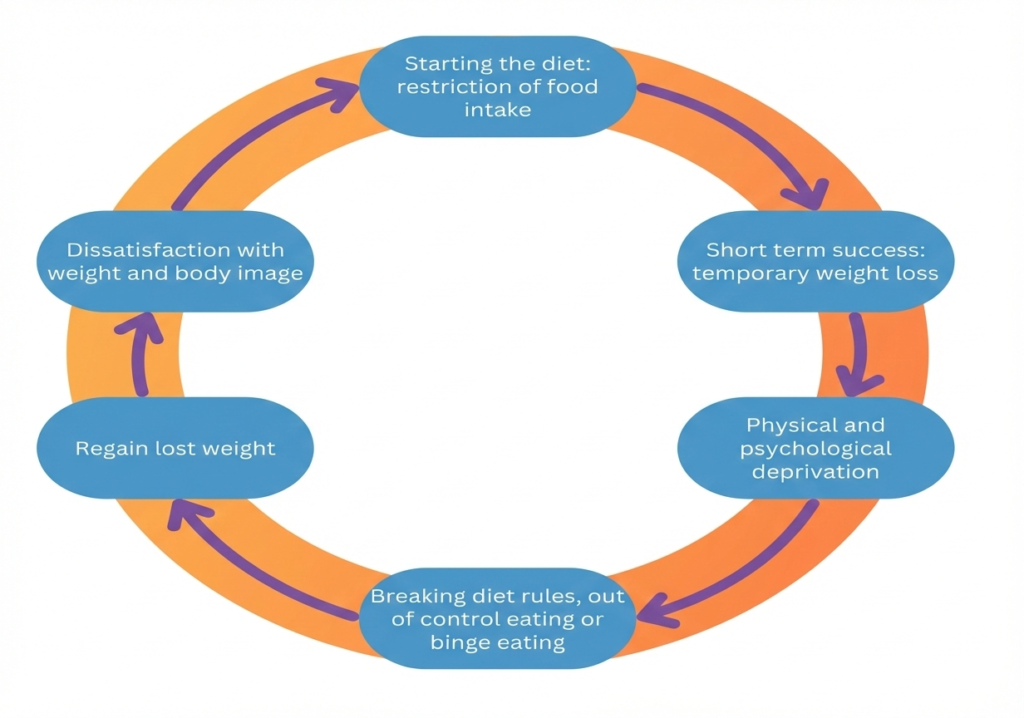
- Trigger binge-eating cycles
- Disrupt menstrual cycles
- Increase anxiety around food
Muscle loss is particularly concerning. Muscle tissue burns more calories than fat. When muscle mass decreases, metabolism slows further. The result? Slower weight loss in the future and faster weight regain.
Emotional Eating and Psychological Patterns
Weight management is not purely physical. Emotional factors play a powerful role.
Many people eat in response to:
- Stress
- Loneliness
- Fatigue
- Celebration
- Anxiety
Food becomes comfort rather than nourishment. Strict dieting often increases psychological stress, making emotional eating more likely. A sustainable plan must address emotional awareness, stress management, and mindful eating rather than imposing rigid food rules.